
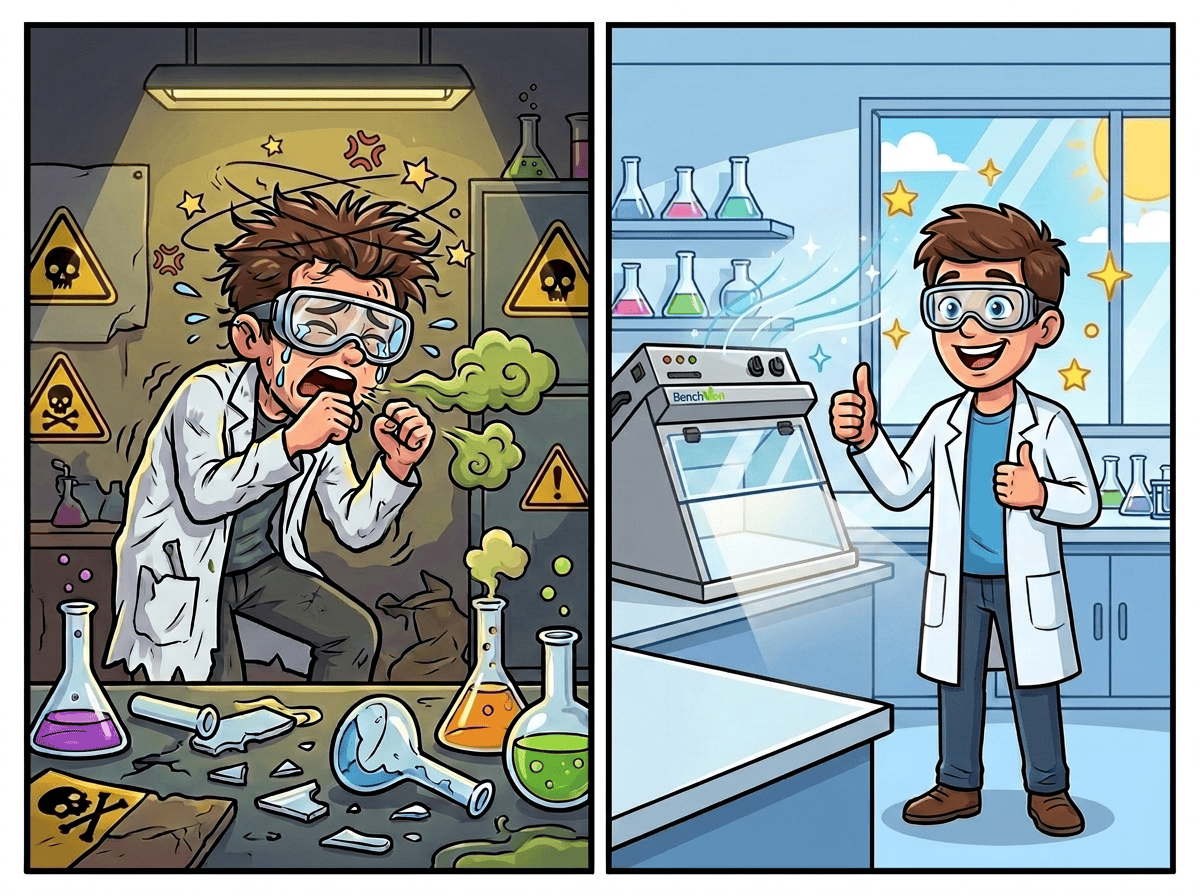
How Extraction Equipment Improves Productivity in the Workplace
Good extraction equipment does more than protect workers — it keeps your operation running. Whether you manage a dental surgery, a spray painting workshop, an electronics assembly line, or a school art department, the quality of your workplace air filtration has a direct bearing on output, compliance, and long-term costs.
This article sets out the practical ways that investing in the right COSHH compliant extraction equipment pays back through improved productivity — and what to look for when choosing a system.
________________________________________
What COSHH and HSE Compliance Means in Practice
Before exploring the productivity benefits, it helps to be clear on the regulatory context.
COSHH (Control of Substances Hazardous to Health) is the UK framework that requires employers to assess and control exposure to hazardous substances — including chemical fumes, particulates, aerosols, and dusts. HSE (Health and Safety Executive) is the body that enforces health and safety law in Great Britain, including COSHH regulations.
Meeting these standards is not optional. Businesses that fail to control hazardous substances face the risk of:
• Enforcement action, improvement notices, or prosecution
• Civil liability for work-related ill health
• Reputational damage and difficulty recruiting and retaining staff
HSE extraction equipment — that is, equipment selected and installed to satisfy the HSE’s control hierarchy — forms a key part of most COSHH compliance programmes. But beyond compliance, the right extraction solution actively supports a more productive working environment. Here is how.
________________________________________
1. Reduced Downtime Caused by Health-Related Absence
Chronic exposure to airborne chemicals and fine particulates is associated with a range of respiratory conditions, including occupational asthma, chemical sensitisation, and long-term lung disease. The HSE estimates that hundreds of thousands of working days are lost annually in the UK due to work-related ill health.
Effective workplace air filtration limits that exposure. Fewer workers experiencing health problems means:
• Fewer sick days and unplanned absences
• Reduced pressure on colleagues covering absent staff
• Fewer interruptions to production schedules
This is particularly relevant in industries such as beauty therapy, model-making, dental technology, and spray painting — sectors where fine particulate and solvent fume exposure is routine without adequate extraction in place.
________________________________________
2. Improved Regulatory Compliance and Operational Continuity
Non-compliance with COSHH and HSE requirements carries operational risks beyond fines. An HSE inspection that results in a prohibition notice or improvement notice can halt production entirely until the issue is resolved.
Having COSHH compliant extraction in place from the outset means:
• Audits and inspections are less disruptive — the evidence of compliance is visible
• Staff can focus on productive work rather than scrambling to address compliance gaps
• There is no risk of enforced shutdown due to inadequate hazard controls
CE marked extraction and filtration equipment, such as the units manufactured by BenchVent, meets the relevant product safety standards and provides a clear starting point for demonstrating compliance to inspectors.
________________________________________
3. Better Employee Morale and Retention
Workers who feel protected at work perform better and stay longer. This is not a soft benefit — it has measurable operational consequences.
High staff turnover is expensive. Recruiting, onboarding, and training new employees takes time and money. In specialist roles — laboratory technicians, dental nurses, electronics assembly workers — the cost is even higher.
When employees can see that their employer has invested in proper HSE extraction equipment and takes air quality seriously, it signals that their wellbeing matters. That has a positive effect on engagement, attendance, and tenure.
________________________________________
4. Continuous Operation Without Unnecessary Interruption
Modern recirculating air filtration cabinets and spray booth extraction units are designed for continuous use. They do not require frequent shutdown for maintenance and — where recirculating rather than ducted — do not depend on complex external infrastructure.
Key advantages for operational continuity:
• Plug-and-play installation — units like those in the BenchVent range can be set up without specialist contractors or building modifications
• Filter change schedules rather than breakdowns — planned maintenance rather than reactive downtime
• Dual-speed fan options — allowing airflow to be matched to task intensity, extending component life
This matters in production environments where any unplanned stoppage has a knock-on effect across the workflow.
Replacement filters and maintenance
________________________________________
5. Higher Output Quality Through Consistent Air Quality Control
In several industries, contamination is the primary cause of product failure or rework. Particulates and airborne fumes that settle on surfaces or interfere with processes directly affect yield.
Examples by sector:
• Electronics assembly — dust and particulate contamination can cause short circuits or component failure
• Dental technology — fine dust from acrylic or ceramic work can contaminate casting and finishing processes
• Model-making and hobby airbrushing — overspray and particulates affect paint adhesion and finish quality
• Film and creative industries — spray painting in uncontrolled environments leads to surface defects
Consistent fume extraction productivity — maintaining clean air throughout a working session — reduces the rate of defects, rework, and wasted materials.
________________________________________
6. More Efficient Use of Skilled Labour
When extraction is automated and reliable, skilled workers are freed from manual ventilation management, cleaning up airborne contamination, or navigating around inadequate makeshift controls. They can concentrate on the work they were hired to do.
Consider the difference between:
• A spray technician who stops regularly to clean overspray from surrounding surfaces because extraction is inadequate
• The same technician working within a properly extracted spray booth, achieving consistent results without interruption
The second scenario produces more output of higher quality in the same amount of time. This is the practical productivity case for fume extraction productivity investment.
________________________________________
7. Long-Term Cost Reduction
The upfront cost of quality extraction equipment is often weighed against short-term budget pressures. In practice, the long-term cost case for proper workplace air filtration is strong.
Health and liability costs
Occupational respiratory disease claims and employers’ liability insurance premiums are both influenced by the extent to which a business has discharged its COSHH duties. Proper extraction reduces exposure, which reduces the risk of claims.
Material savings
In processes where solvents, resins, or fine materials are used, extraction reduces the amount of product lost to airborne contamination or surface deposition. Less waste means lower material costs over time.
Equipment longevity
Particulate contamination damages machinery and sensitive equipment. Clean air environments extend the working life of tools, components, and production equipment — particularly relevant in electronics and precision manufacturing.
________________________________________
8. Scalability: Extraction That Grows With Your Operation
One of the practical advantages of modern extraction and filtration units is that capacity can be increased without significant structural change. Adding a unit to a new workstation, or upgrading to a higher-airflow model as production volume grows, is straightforward when equipment is self-contained.
This is especially valuable for:
• SMEs scaling production — adding capacity without requiring new extraction ductwork
• Multi-site operations — applying consistent safety standards across locations using standardised, CE marked equipment
• Educational institutions — adding stations as cohort sizes change
Standardised HSE extraction equipment across sites also simplifies compliance documentation and audit preparation.
BenchVent product range — spray booths and air filtration cabinets
________________________________________
9. Environmental and Reputational Benefits
Recirculating filtration systems — those that clean and return air to the room rather than ducting it outside — offer an environmental advantage over systems that exhaust contaminated air directly to atmosphere. By capturing particulates and vapours within HEPA and activated carbon filters, they:
• Reduce emissions to the external environment
• Avoid the need for planning permissions or ductwork modifications
• Support sustainability goals without sacrificing extraction performance
For businesses with environmental commitments or those operating under planning conditions, this is a meaningful operational benefit.
________________________________________
10. Streamlined Compliance Documentation
Extraction systems with clear specifications — airflow velocities, filter types, CE markings, and supporting documentation — simplify the COSHH assessment process. Rather than attempting to demonstrate equivalence for ad hoc arrangements, businesses can reference the equipment’s specification directly.
Benefits include:
• Faster completion of COSHH risk assessments
• Clearer evidence file for HSE inspections
• Reduced administrative burden on managers and health and safety staff
BenchVent units come with technical specifications and supporting documentation designed to assist with COSHH compliance records.
________________________________________
Choosing the Right Extraction Equipment for Your Workplace
Not all extraction solutions are equally suited to every application. When selecting equipment, consider:
1. The hazard type — fine dust, solvent vapour, biological aerosols, and chemical fumes each require different filter combinations. HEPA filters address fine particulates; activated carbon filters are required for vapour and odour control.
2. The airflow rate required — the face velocity across the working opening should meet HSE guidance for the process in question (typically 0.5 m/s or above for most spray and coating processes).
3. The physical footprint — benchtop units suit individual workstations; larger hooded cabinets are appropriate for bigger workpieces.
4. Installation constraints — recirculating units require no external ducting and can be repositioned; ducted units offer higher airflow but require fixed installation.
5. Ongoing filter costs — factor in the cost and frequency of filter replacement when comparing systems over a three- to five-year horizon.
See our Blog on how to choose the right spray booth or filtration cabinet
________________________________________
Summary
The productivity case for extraction machine investment is not simply about meeting regulatory requirements — though compliance is essential. Properly specified COSHH compliant extraction equipment reduces absence, protects output quality, enables continuous operation, and lowers long-term costs across a range of industries.
From dental laboratories to film production, electronics assembly to educational workshops, the businesses that treat workplace air filtration as a core operational investment — rather than a compliance afterthought — tend to run more smoothly, lose fewer working days, and produce more consistent results.
Browse BenchVent’s range of spray booths and air filtration cabinets – BenchVent spray booth and filtration range
________________________________________
Frequently Asked Questions
1. How does extraction equipment improve productivity at work?
Extraction equipment removes airborne hazards — chemical fumes, fine dusts, and aerosols — from the working environment. This reduces health-related absence, prevents contamination of products and processes, allows continuous operation without interruption, and frees skilled workers to focus on productive tasks rather than managing the effects of poor air quality.
2. What is COSHH compliant extraction, and do I need it?
COSHH (Control of Substances Hazardous to Health) requires UK employers to assess and control exposure to hazardous substances. If your workplace involves chemical spraying, airbrushing, sanding, welding, solvent use, or similar processes, you are almost certainly required to have suitable extraction controls in place. COSHH compliant extraction means equipment that is selected, installed, and maintained to reduce exposure to the levels set out in the regulations and relevant Workplace Exposure Limits.
3. What is the difference between recirculating and ducted fume extraction?
Recirculating extraction units clean the air using HEPA and activated carbon filters and return it to the room. They require no external ductwork and can be installed quickly without building modifications. Ducted systems exhaust air directly outside and generally offer higher airflow capacity, but require fixed installation and may need planning approval. For most benchtop and small-scale spray processes, recirculating units are sufficient and significantly easier to install.
4. How do I know if my extraction equipment meets HSE requirements?
HSE guidance recommends that Local Exhaust Ventilation (LEV) systems achieve sufficient capture velocity at the source of the hazardous substance. For most spray and coating processes, this is typically around 0.5 m/s face velocity or above, though specific figures vary by process. Equipment should be CE marked, supplied with technical documentation supporting a COSHH assessment, and subject to regular inspection and filter maintenance. If you are unsure whether your current setup is adequate, the HSE publishes guidance on LEV systems and COSHH assessments on its website.
5. How often should extraction equipment filters be replaced?
Filter replacement frequency depends on the nature and volume of the work being performed. Heavily loaded filters reduce airflow and extraction effectiveness, which both undermines COSHH compliance and accelerates fan motor wear. Most manufacturers provide guidance on replacement intervals based on usage; in practice, filters in regular commercial use may need replacing every few months. A vanometer or airflow indicator — as fitted to many BenchVent units — allows users to monitor performance and identify when filtration efficiency has dropped, removing the guesswork from maintenance scheduling.